Securing Global Credit Streams: API Frameworks and Perpetual Oversight in Mobile Recurring Merchant Operations

Global merchant services have expanded rapidly since the mid-2020s, and researchers at institutions across North America and Europe have documented how API connections combined with always-on support systems maintain the integrity of recurring credit transactions on mobile platforms. Data compiled by the European Central Bank through 2025 shows transaction volumes in subscription-based services rising steadily, with mobile channels accounting for more than 60 percent of activity in several member states by early 2026.
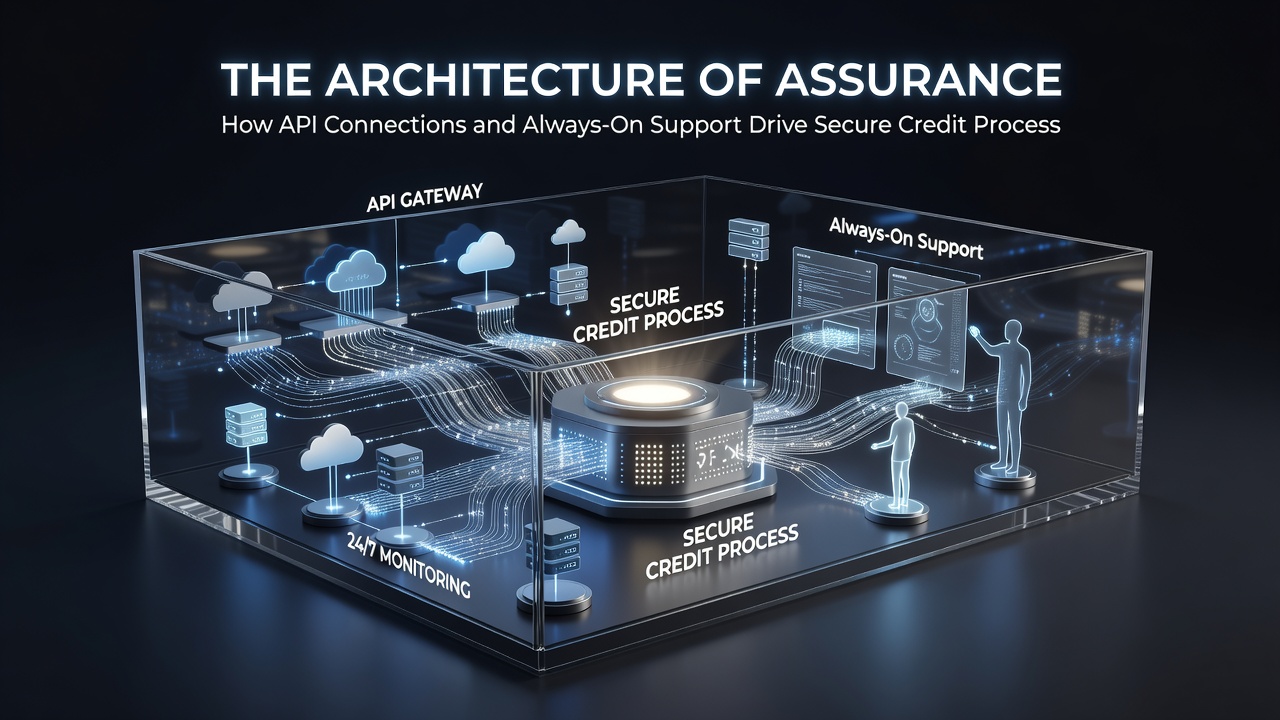
API frameworks serve as the connective tissue between merchant applications, payment gateways, and banking networks. These interfaces transmit authorization requests, token exchanges, and status updates in milliseconds, while encryption protocols embedded at each layer reduce exposure points. Observers note that standardized endpoints allow developers to integrate compliance checks directly into the transaction flow, which aligns with requirements outlined in the PCI Data Security Standard updates released in late 2025.
Core Components of API-Driven Processing
Modern architectures rely on modular endpoints that handle authentication, routing, and settlement separately. One study released by the Bank of Canada in March 2026 examined over 12 million recurring mobile transactions and found that systems employing layered API verification experienced 34 percent fewer authorization declines than those using legacy batch methods. The same report indicated that real-time status callbacks enabled support teams to intervene within seconds when anomalies appeared in variable-cycle billing patterns.
Tokenization remains central to these designs. Instead of passing full card details, APIs exchange unique identifiers that expire after a set number of uses or time window. This approach limits the value of any intercepted data, and organizations operating in Australia have reported similar outcomes following the rollout of the New Payments Platform enhancements in 2024 and 2025.
Always-on support extends beyond simple helpdesk availability. Dedicated monitoring centers staffed around the clock review flagged transactions, coordinate with issuers, and push configuration updates to live API instances. In June 2026, several large merchant acquirers announced expansions of these centers in Singapore and Frankfurt to cover the Asia-Pacific and European time zones without gaps.
Regional Adaptations and Compliance Pathways
Payment networks in different regions have adopted distinct yet compatible approaches to recurring billing. In the United States, the Federal Reserve's 2025 guidance on faster payments encouraged the use of API-based confirmation loops that feed directly into fraud scoring models. Meanwhile, Singapore's Monetary Authority has emphasized continuous logging requirements that feed support dashboards, allowing teams to correlate transaction velocity with device fingerprint data across borders.
These regional frameworks converge on common principles: mutual authentication between API clients and servers, immutable audit trails, and automated escalation procedures when support thresholds are breached. A 2025 joint paper from academic researchers at the University of Melbourne and the University of Toronto highlighted that organizations maintaining 24-hour API health checks reduced average incident resolution time from 47 minutes to under 12 minutes.
Operational Patterns Observed in 2026
Transaction logs analyzed during the first half of 2026 reveal recurring patterns in mobile subscription traffic. Peak authorization loads occur between 8 p.m. and midnight in local time zones, coinciding with users managing subscriptions on personal devices. API rate-limiting combined with support-triggered throttling has proven effective at smoothing these spikes without interrupting legitimate billing cycles.
Case examples from European acquirers show that when an API endpoint detects repeated failed attempts from a single device fingerprint, support agents receive an immediate alert and can initiate additional verification steps before funds move. Similar workflows in Canadian merchant environments have incorporated geolocation signals to further refine risk scoring, demonstrating measurable declines in chargeback ratios.
Future Integration Trends
Industry reports project continued growth in API granularity through 2027, with finer controls over retry logic, currency conversion, and partial refunds becoming standard. Support infrastructure is expected to incorporate predictive analytics that flag potential compliance drift before it affects live traffic. These developments build on existing foundations rather than replacing them, preserving backward compatibility for merchants already embedded in global networks.
Conclusion
The combination of robust API architectures and continuous support operations forms the operational backbone for secure mobile recurring credit processing on a worldwide scale. Evidence gathered through mid-2026 across multiple regulatory jurisdictions confirms that these interconnected systems reduce exposure while maintaining transaction throughput, and ongoing refinements continue to address emerging threat vectors without disrupting merchant workflows.