Navigating Verification Protocols Across International Networks for Portable Subscription Services
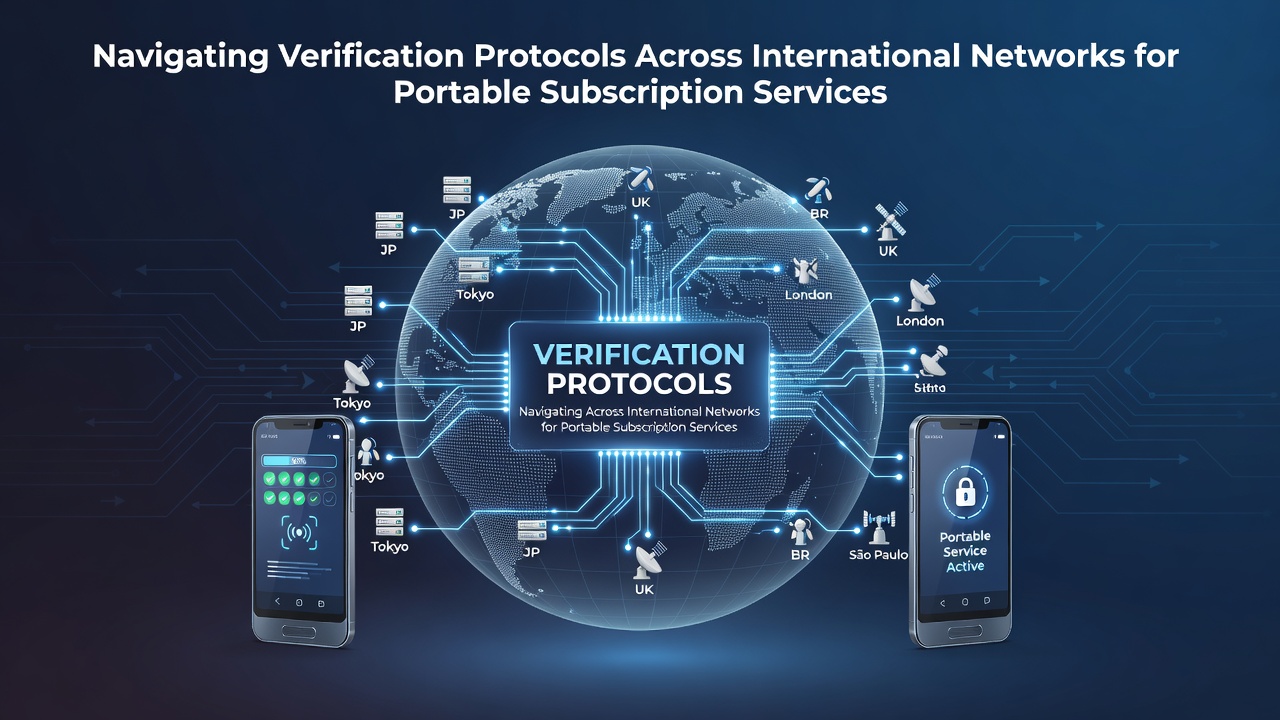
Verification protocols form the backbone of portable subscription services that operate across borders, and those protocols adapt to the demands of international mobile networks where users move between carriers and jurisdictions. Portable subscription services encompass mobile data plans, streaming access on devices, and app-based content delivered through cellular and Wi-Fi connections that span multiple countries.
Core Components of Cross-Border Verification
International networks rely on standardized authentication methods such as the Diameter protocol and its predecessors to confirm device identity and subscription validity when users roam outside their home region. These systems exchange signaling messages between home location registers and visitor location registers, which allows real-time checks on account status without exposing full user credentials. Observers note that such exchanges occur thousands of times per second during peak travel seasons, and each message carries encrypted tokens that carriers validate against centralized databases.
Device-level checks supplement network signaling through embedded subscriber identity modules that store unique identifiers tied to specific service agreements. When a portable device enters a new country, the local network queries these identifiers against roaming agreements established under frameworks coordinated by organizations like the GSMA. This process confirms whether the subscription remains active and whether the device meets technical requirements for the visited network.
Regional Regulatory Influences on Protocol Design
Verification requirements differ by region because regulatory bodies impose distinct data handling and consent rules. The Federal Communications Commission in the United States outlines carrier obligations for authenticating users on domestic and roaming networks, while the European Union Agency for Cybersecurity sets technical guidelines that affect how portable services verify access across member states. Australian authorities through the Australian Communications and Media Authority add further layers focused on consumer protection during international data transfers.
These overlapping standards force service providers to maintain parallel verification pathways. One pathway handles basic network authentication while another manages compliance with local privacy statutes that govern how subscription details may be stored or shared during cross-border handoffs. Data shows that carriers updated their systems ahead of new roaming rules scheduled for implementation in June 2026, which will require additional consent logging for users traveling between North America and Europe.

Technical Mechanisms in Practice
Token-based verification has become standard because it reduces the need to transmit sensitive identifiers repeatedly across long distances. Portable devices generate short-lived tokens during initial network attachment, and these tokens travel through secure tunnels to authorization servers that confirm subscription entitlements. Researchers at technical institutes have documented how token lifetimes are calibrated to balance security against the latency that travelers experience when crossing network boundaries.
Multi-factor elements sometimes combine with network signaling when services require stronger assurance. Location data from cell towers or satellite signals can serve as an additional check, confirming that a device requesting access is physically present in a permitted region. Industry reports indicate that such layered approaches cut unauthorized access attempts by measurable margins on high-volume international routes.
Challenges During Network Transitions
Handover events between networks create brief windows where verification must complete before service interruption occurs. Portable subscription platforms address this through predictive caching of verification results at edge nodes near border crossings and major airports. When a device approaches a new network, cached data allows near-instant confirmation while the full signaling exchange finishes in the background.
Language and formatting differences in signaling messages occasionally produce mismatches that delay verification. Carriers mitigate these issues through protocol translation gateways that normalize data formats before they reach central authentication servers. Studies conducted by university research groups have mapped common mismatch patterns across Asia-Pacific and European corridors, leading to targeted software updates that carriers deployed in recent years.
Future Protocol Developments
Work continues on next-generation verification frameworks that incorporate more granular control over what information crosses borders. These frameworks aim to support emerging portable services that operate on low-earth orbit satellite networks alongside traditional cellular infrastructure. Coordination efforts among standards bodies seek to align verification procedures so that a single device can maintain continuous access while moving between terrestrial and non-terrestrial networks.
June 2026 marks the target date for several pilot programs testing unified verification tokens across North American, European, and Asian carriers. Early results from limited trials suggest that these tokens reduce signaling overhead while preserving the security properties required by each participating jurisdiction.
Conclusion
Verification protocols for portable subscription services continue to evolve in response to expanding international network coverage and shifting regulatory landscapes. Carriers and service providers maintain compatibility through adherence to established signaling standards and ongoing adjustments to regional requirements. The infrastructure supporting these verifications operates continuously, processing authentication requests that enable seamless access for users who travel between countries and switch between network types.