Embedded Security Frameworks in Mobile Recurring Billing Systems
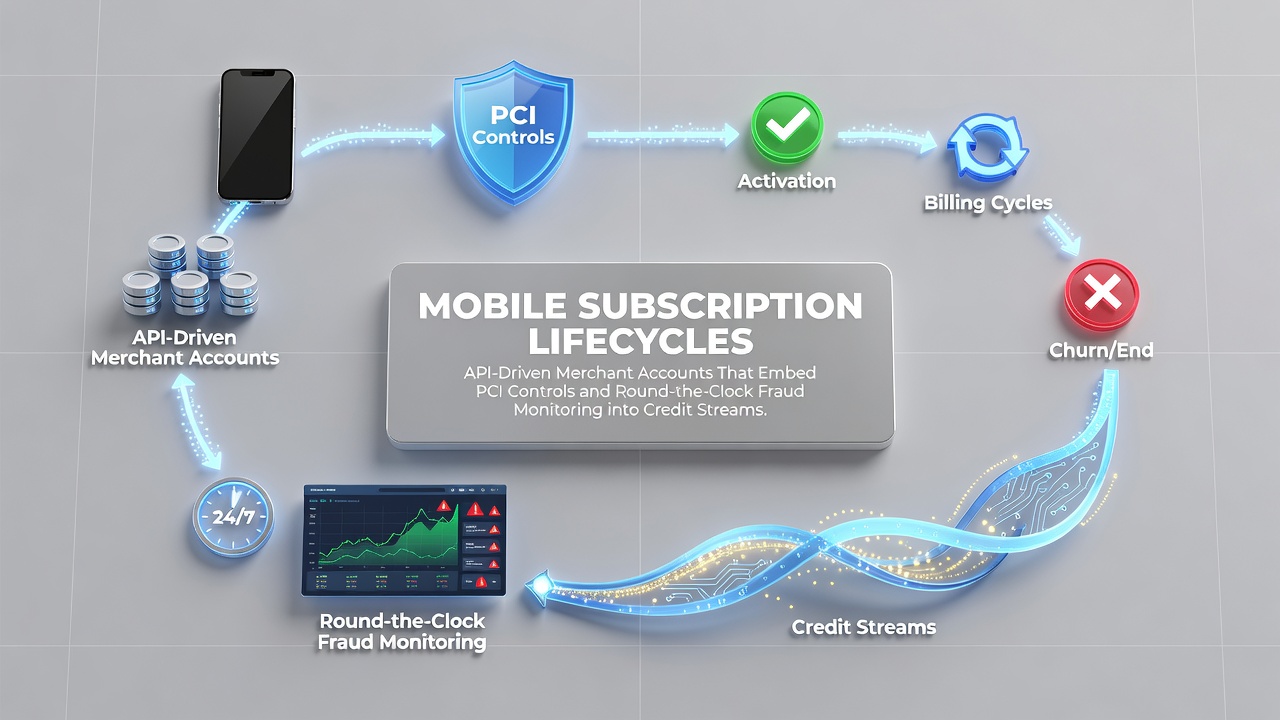
Mobile subscription lifecycles encompass the full progression from initial user enrollment through recurring billing cycles, account updates, and eventual cancellations or upgrades, and API-driven merchant accounts now integrate PCI controls directly into these streams while maintaining continuous fraud oversight. Research indicates that such integrations allow transaction data to flow through encrypted channels that automatically validate cardholder information against established security benchmarks at each renewal point.
API Architectures Supporting Subscription Management
Developers build these merchant accounts around modular APIs that handle variable billing intervals common in mobile services, and data from industry reports shows seamless connections between user devices and backend processing systems reduce latency during high-volume periods such as software update seasons. Observers note that tokenization occurs at the API level so sensitive card details never reach the merchant server, which aligns with protocols updated through global standards bodies.
Those who study payment infrastructures find that real-time validation calls occur within milliseconds of each billing trigger, and this process embeds compliance checks that flag non-conforming data patterns before authorization proceeds. In June 2026 several networks reported expanded API endpoints that support dynamic pricing adjustments without disrupting PCI scope boundaries.
Continuous Fraud Oversight Mechanisms
Round-the-clock monitoring layers analyze behavioral signals including device location shifts, usage spikes, and payment velocity across global networks, and figures from the European Central Bank reveal that integrated systems intercept anomalous activity in recurring streams at rates exceeding prior detection thresholds. Experts observe these tools operate through machine learning models trained on historical subscription datasets, which allows them to distinguish legitimate renewals from coordinated testing attempts.
Yet the architecture maintains separation between monitoring modules and core transaction rails, so alerts trigger without halting legitimate flows. Research from the Reserve Bank of Australia indicates that such layered approaches lowered false positive rates in mobile billing environments by notable margins during recent evaluation periods.
Take one case where a streaming platform implemented API hooks that cross-reference subscriber IP histories with card issuance regions, and the system identified mismatches early enough to prompt additional verification steps before the next cycle processed. This approach demonstrates how embedded controls function within actual merchant workflows rather than as add-on services.
Lifecycle Stages and Security Integration Points
Enrollment begins when users submit payment details through mobile interfaces that immediately route data through PCI-compliant gateways, and subsequent renewals trigger the same validation sequence while fraud engines review updated risk scores. Account changes such as card swaps invoke fresh token exchanges that preserve continuity without exposing original credentials.
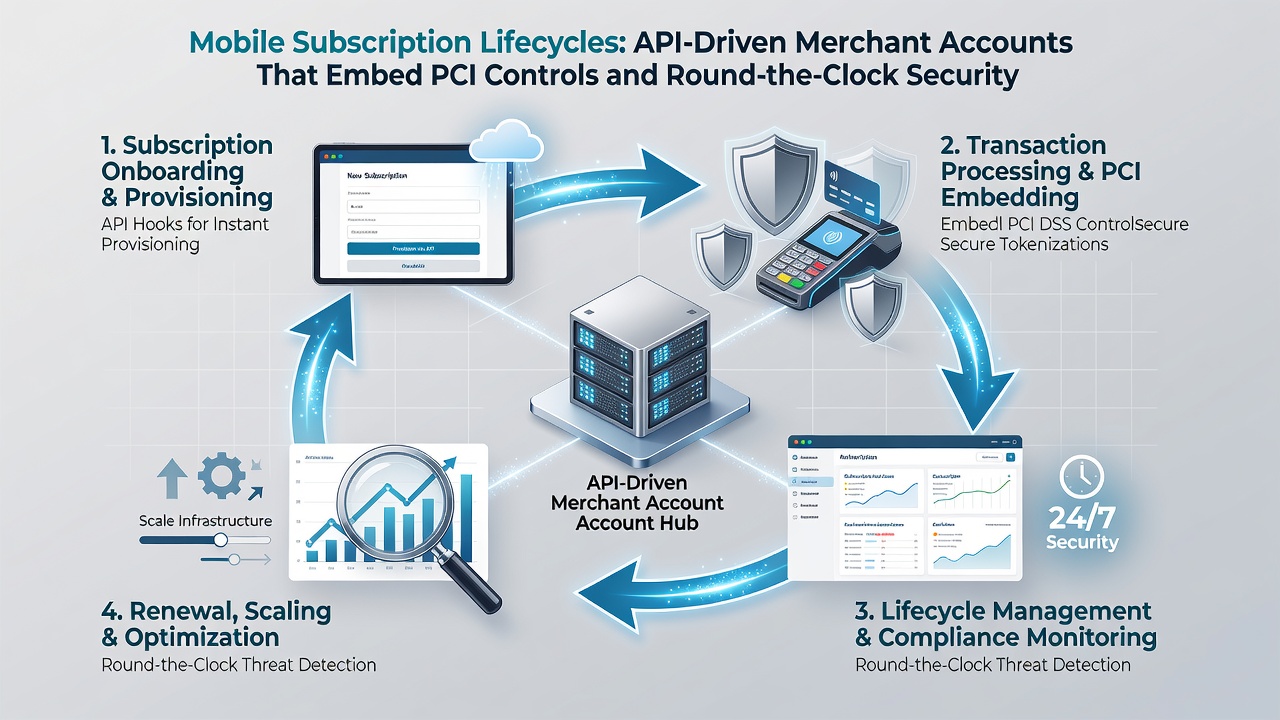
Cancellation flows also route through the same API layer, which ensures any pending charges receive final scrutiny before closure, and data indicates this unified handling reduces orphaned transactions that previously bypassed review. According to documentation from the PCI Security Standards Council, maintaining these controls throughout the lifecycle keeps merchant accounts within defined compliance boundaries even as subscription volumes scale.
Global Network Considerations
International operators face additional routing complexities when subscriptions cross regulatory jurisdictions, and API frameworks address this through configurable compliance flags that adapt to regional requirements without manual intervention. Studies from academic research groups in Canada highlight how persistent monitoring correlates transaction metadata across borders to surface coordinated fraud campaigns targeting portable billing services.
Merchants who connect to these systems gain visibility into aggregated risk indicators, which helps them adjust underwriting criteria for new subscriber segments while staying aligned with evolving card network rules. The result appears in streamlined reconciliation processes that tie each lifecycle event back to its originating compliance record.
Conclusion
API-driven merchant accounts that embed PCI controls and continuous fraud monitoring now form the operational backbone for mobile subscription lifecycles, and evidence from multiple regulatory regions confirms these integrations support both security and operational continuity across billing cycles. As networks evolve, the same frameworks enable merchants to manage variable-cycle operations without fragmenting their compliance posture.