Behind the Curtain: How Support Teams Shape API Configurations for Tiered Merchant Accounts in Cross-Border Recurring Credit Streams
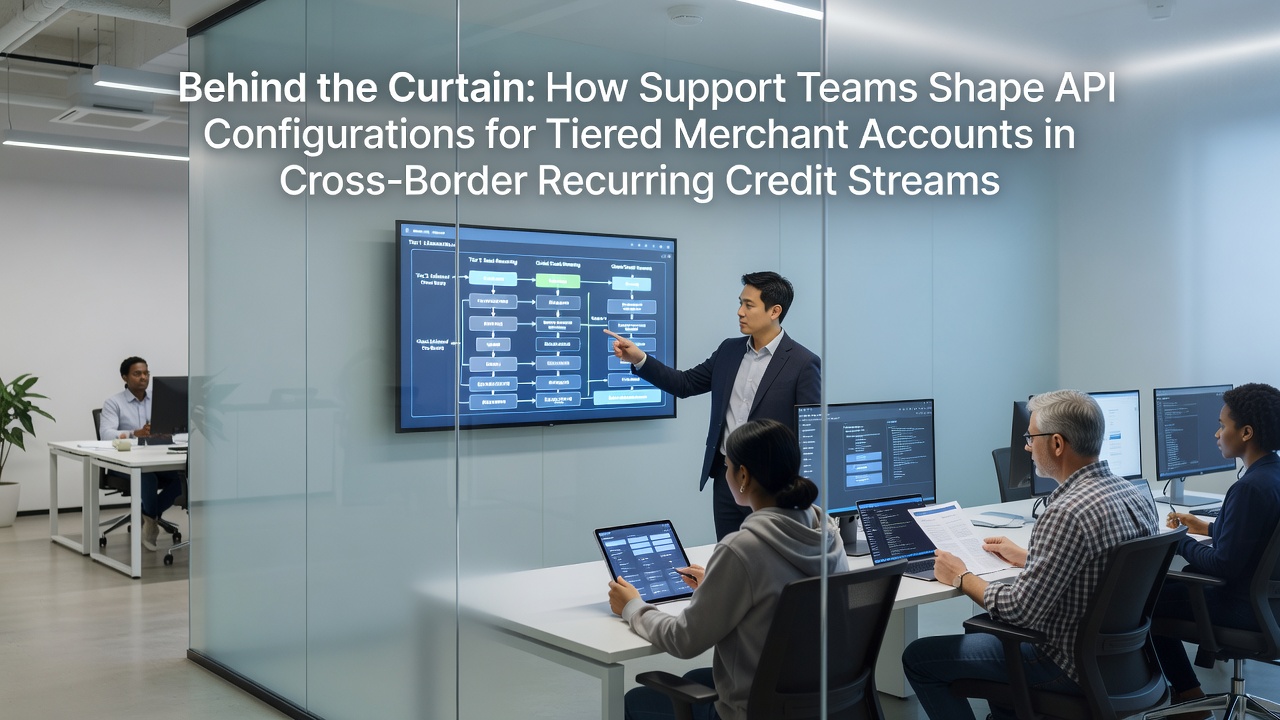
Support teams operate at the intersection of technical infrastructure and merchant requirements when configuring APIs for tiered accounts that process recurring credit streams across borders, and their decisions directly influence transaction routing, compliance checks, and settlement timelines. Research indicates these teams adjust parameters such as rate limits, authentication protocols, and webhook endpoints based on each merchant's assigned tier, which often reflects volume thresholds, risk profiles, and geographic scope. Data from cross-border payment networks shows that configurations vary significantly between entry-level and premium tiers, with higher tiers receiving expanded access to multi-currency handling and priority retry logic for failed recurring charges.
Tier Structures and Their Technical Demands
Merchant account tiers typically divide into categories determined by monthly transaction volume and historical chargeback ratios, while support personnel translate these classifications into specific API settings that govern recurring billing cycles. Observers note that a tier-one merchant might receive basic endpoint access limited to domestic currency pairs, whereas tier-three accounts gain custom headers for real-time currency conversion and dynamic descriptor updates that reduce disputes in international recurring flows. Those who manage these systems report that support adjustments often occur during onboarding when initial volume projections shift after the first three months of operation, prompting reconfiguration of timeout values and batch processing windows to accommodate cross-border latency patterns.
Support Interventions in API Parameter Tuning
Technical support specialists review merchant-submitted integration logs and identify mismatches between expected adn actual API responses before finalizing configurations for recurring credit streams, and this process frequently involves enabling or disabling features such as idempotency keys and partial capture flags. According to transaction monitoring reports, support teams at larger processors handle an average of 47 configuration requests per week related to cross-border recurring setups, with adjustments to rate-limiting rules proving especially common for merchants operating in multiple regulatory jurisdictions. Experts have observed that these interventions prevent cascading failures when one region experiences peak billing dates that coincide with another region's settlement holidays, thereby maintaining continuity across the credit stream.
Cross-Border Variables Handled Through Configuration
Support personnel incorporate region-specific requirements into API setups by mapping local data fields for tax identifiers and consumer consent records, which ensures recurring charges comply with varying disclosure rules without disrupting the merchant's core billing logic. Figures from international payment studies reveal that misconfigured currency handling accounts for approximately 12 percent of declined recurring transactions in cross-border environments, prompting support teams to activate fallback conversion services and set precise decimal precision rules for each supported currency pair. But here's the thing: these teams also calibrate retry schedules differently for merchants whose customer bases span time zones that affect payment authorization windows, using historical decline data to optimize retry intervals rather than applying uniform global schedules.

Compliance Alignment and Monitoring Integration
Support configurations routinely embed compliance flags that trigger additional verification steps for high-risk recurring streams, and these flags connect directly to external monitoring platforms used by processors to satisfy regulatory expectations. A Bank for International Settlements report highlights how tiered API access controls help isolate recurring credit activity that crosses multiple jurisdictions, reducing the likelihood of inadvertent violations during high-volume billing periods. What's interesting is that support teams often schedule configuration reviews ahead of projected regulatory updates, such as the framework revisions anticipated in July 2026, allowing merchants to test new authentication flows before they become mandatory.
Practical Adjustments During Live Operations
When recurring streams encounter unexpected regional restrictions, support teams respond by modifying API header values and updating merchant-specific whitelists that govern which payment methods can initiate cross-border charges. Those who've studied operational patterns find that such targeted changes typically restore processing within four hours when applied to tier-two and tier-three accounts, while tier-one merchants may require additional documentation reviews that extend the resolution window. Data shows these interventions preserve authorization rates above 94 percent for merchants whose customer bases include frequent international travelers whose billing addresses change across billing cycles.
Conclusion
Support teams continue to refine API configurations that underpin tiered merchant accounts handling cross-border recurring credit streams, and their ongoing work ensures that technical parameters align with both operational demands and regulatory expectations. Ongoing monitoring of transaction patterns and regulatory developments, including those scheduled around July 2026, informs the adjustments these teams implement to maintain reliable processing across diverse merchant profiles and geographic regions. A Federal Reserve analysis underscores the value of these configuration practices in sustaining stable cross-border flows as merchant volumes and international regulatory landscapes evolve.