API Integration Strategies for Compliance in Mobile Recurring Billing Systems: Defending Merchant Account Security
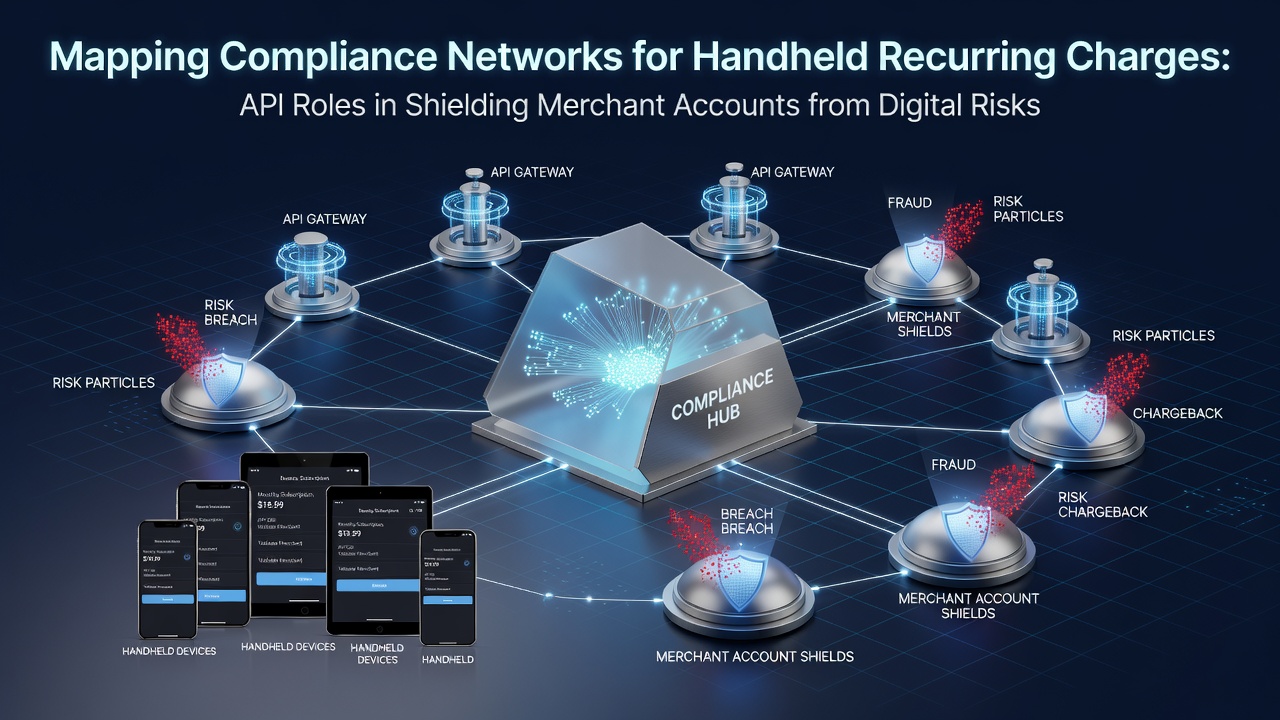
Mapping compliance networks for handheld recurring charges requires careful attention to how APIs connect mobile billing platforms with regulatory frameworks that protect merchant accounts from digital risks, and researchers have documented these connections through detailed infrastructure studies that trace data flows across international boundaries.
Understanding Compliance Mapping in Mobile Payment Environments
Compliance mapping involves charting the pathways through which recurring charges travel from mobile devices to merchant processors while adhering to established security protocols, and data from regulatory bodies across multiple regions shows that these maps help identify potential exposure points where unauthorized access might occur. Studies from academic institutions in North America and Europe reveal that handheld subscription services generate continuous transaction streams that demand real-time verification layers integrated directly into API calls.
Those who analyze payment infrastructures note that compliance networks extend beyond basic encryption to include dynamic authentication checks that adjust based on transaction patterns, while global figures indicate rising volumes of mobile recurring payments have prompted updates to verification standards. In June 2026 several oversight agencies released coordinated reports highlighting the need for unified API endpoints that link merchant systems with cross-border compliance databases.
API Functions in Risk Mitigation for Recurring Transactions
APIs serve as the operational bridges that transmit authorization requests, validate subscriber credentials, and enforce compliance rules during each billing cycle, and evidence from industry reports demonstrates how these interfaces reduce exposure by routing data through monitored channels that flag anomalies before they reach merchant accounts. Observers in the field point out that mobile-specific APIs often incorporate geolocation data alongside device identifiers to strengthen identity confirmation processes.
Research indicates that shielding merchant accounts involves layering multiple API functions such as tokenization, velocity checks, and automated reporting mechanisms that feed directly into compliance dashboards, yet the effectiveness depends on how well these components align with regional regulatory requirements. One study from an Australian university examined transaction logs and found that API-driven alerts prevented a measurable portion of fraudulent recurring attempts in tested environments.
Digital Risk Factors in Handheld Subscription Models
Digital risks in this space include credential stuffing attempts, account takeover schemes, and synthetic identity fraud that target recurring billing relationships, while statistics compiled by government agencies in Canada and the European Union show these threats have evolved alongside the growth of mobile commerce platforms. Mapping exercises help organizations visualize where these risks intersect with API traffic and merchant settlement processes.
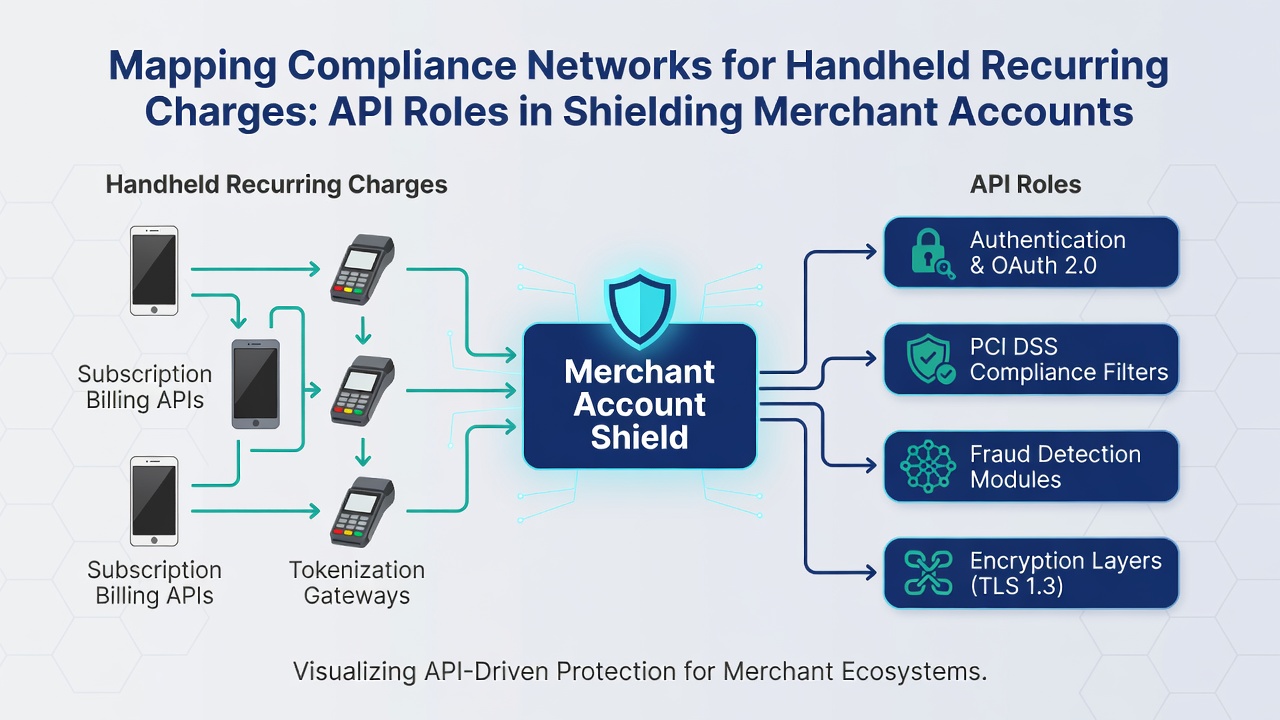
Experts have observed that handheld devices introduce additional variables such as operating system updates and app permission changes that can affect compliance status, and organizations that maintain current network maps adjust their API configurations accordingly to maintain alignment with standards set by bodies like the PCI Security Standards Council. PCI Security Standards Council documentation outlines specific requirements for maintaining secure recurring payment flows through mobile channels.
Building Resilient Networks Through Coordinated API Design
Coordinated API design incorporates compliance checkpoints at multiple stages of the transaction lifecycle, and this approach allows merchant accounts to receive continuous protection as data moves between mobile apps, gateways, and settlement systems. Reports from trade organizations in Asia-Pacific regions describe successful implementations where APIs automatically query centralized compliance registries before authorizing recurring charges.
Those mapping these networks often include fallback procedures that activate when primary verification paths encounter issues, thereby maintaining service continuity while preserving security posture. Data compiled through 2025 and into June 2026 indicates that merchants using such layered API structures experienced fewer account-level disruptions compared to those relying on single-point verification methods.
Regulatory Alignment Across International Mobile Networks
International alignment requires APIs to accommodate varying rules from different jurisdictions, and agencies in the United States, Singapore, and Brazil have issued guidance on how mobile recurring services should structure their compliance reporting. Network maps that incorporate these regional differences enable smoother cross-border operations for merchants handling subscription services on handheld devices.
Academic analyses of payment ecosystems show that effective mapping also tracks how API updates propagate through compliance frameworks, ensuring that changes in one area do not create gaps elsewhere. European Central Bank occasional papers provide detailed examinations of similar integration challenges in digital payment environments.
Conclusion
Mapping compliance networks for handheld recurring charges through strategic API implementation provides merchant accounts with structured defenses against digital risks, and continued development of these systems reflects ongoing efforts by regulatory bodies and researchers to address evolving transaction patterns. Organizations that maintain detailed, updated maps position themselves to respond effectively as mobile billing volumes and associated threats continue to develop.